David Krakauer Clarinet
Kathleen Tagg Piano
Mehdi Haddab Electric Oud
Jerome Harris Bass and Vocals
Karimouche Vocals
Modgeist Elektronics
Afra Mussawisade Percussion
Luis Lozano Quereda, Pablo Rosales Calzadilla Clarinet
David González Esteban, Sergio Rincón Gálvez Horn
José Hornos García, Fernando Martínez Rodríguez Trumpet
Marta Pérez Navarro Violin
Antonio Peula Ortiz Cello
Students of the Fundación Barenboim-Said Seville
Program
Un Monde de loups (A World of Wolves) (Krakauer/Tagg/Amarouche/Charry)
The Sages Speak (Krakauer)
November 22 (Azmeh, arr. Tagg)
Humans (Krakauer/Tagg)
Whisperings of the Earth (Tagg)
A Poor Wayfaring Stranger (traditionell, arr. Harris/Tagg)
The Geyser (Krakauer/Tagg)
Der Gasn Nign (traditionell, arr. Krakauer/Tagg)
Love Song for Lemberg/Lvov (Krakauer, arr. Tagg)
Berimbau (Tagg)
Es Brent (Songs of Action version)
(Gebirtig, arr. Krakauer/Charry/Tagg mit zusätzlichem Text von Karimouche)
Synagogue Wail (Krakauer)
Roumanian Pizzica (Songs of Action version) (Krakauer/Amarouche, arr. Charry/Tagg)
There will be no intermission.
Read the song texts of tonight's vocal pieces:
Song Texts
Un Monde de loups
Ma grand-mère nous chantait cette histoire,
Celle des sept chevreaux … et du loup.
Mais en grandissant, j’ai compris :
Le loup dépasse le conte.
Il se glisse partout, il change de visage,
Il porte un costume bien taillé ;
Méfiez vous du loup.
Refrain
Eza mahzouza
Halé l’beb elia
Jebt lma fi goumgoumi
Jebt hleb fi bezoulé
Jebt hchich fi begrouni
Mes petits, écoutez,
Le monde est plein de loups.
Si ce n’est pas ma chanson,
La porte reste sous verrou ;
Méfiez-vous du loup,
Il rôde, il entend tout,
La confiance se gagne,
Jamais en un coup.
La mère s’éloigne un peu,
La nuit retient son souffle.
Le loup se lèche la gueule,
Et prépare déjà son coup.
Dans ce monde de loups,
Protège ton verrou.
Le loup est là,
Farine sur la patte,
Voix douce, calme,
La ruse délicate.
La porte cède
Sous ses mots.
Les dents brillent,
La gueule en alerte.
Un par un,
Les petits disparaissent
Comme les rêves
Que le monde encaisse.
Le ventre plein,
Le monstre s’endort.
Le loup ment bien,
Mais le loup a tort.
La mère revient,
Elle comprend tout :
Le silence coupe
Comme un couteau,
Sa colère devient arme,
Ses cornes comme des lames ;
La tête baissée, pas une larme.
Le ventre s’ouvre
Et la vie ressort,
Les petits respirent,
Le loup dort encore,
Des pierres dans sa panse.
La justice prend place
Quand le loup se lève,
Le poids du crime l’embrasse.
Le loup est mort,
Les mahzouza en vie
Une mère sans remords,
La justice est servie.
La vengeance gronde,
Mais la vie respire.
Les loups tombent
Quand la vérité tire.
Le loup est mort,
Le loup parlait doux.
La vérité tombe toujours
Comme un coup,
Alors souvenez-vous :
Même les loups
Finissent à genoux.
***
I wanted to make a song
That could save the planet
And make it with my most beautiful writing
Then declaim it in a poetic style
So I engraved on the paper solemnly:
The Earth is in mourning
But I found that it didn’t work
So I tore up my sheet
I tore up all my notebooks
And finally I couldn’t write anything
Nature is too beautiful
For the person who has nothing to say
I had thrown so much paper
On the floor and on the table
That instead of saving the planet
I had killed a tree
Es Brent (Songs of Action version)
S’brent! Briderlekh, s’brent!
Oy, undzer orem shtetl nebekh brent!
Beyze, vintn mit yirgozn
Raysn, brekhn un tseblozn
Shtarker nokh di vilde flamen,
Alts arum shoyn brent.
Un ir shteyt un kukt azoy zikh
Mit farleygte hent,
Un ir shteyt un kukt azoy zikh-
Undzer shtetl brent!
Shteyt nit, brider, ot azoy zikh
Mit farleygte hent.
Shteyt nit, brider, lesht dos fayer –
Undzer shtetl brent!
It burns! Brothers, it burns!
Our poor shtetl pitifully burns!
Angry wind with rage and curses
Tears and shatters and disperses.
Wild flames leap, they twist and turn,
Everything now burns!
And you stand there looking on
Hands folded, palms upturned,
And you stand there looking on
Our shtetl burns!
Don’t just stand there looking on
Hands folded, palms upturned,
Don’t just stand, put out the fire—
Our shtetl burns!
Roumanian Pizzica (Songs of Action version)
Le bonze a bronzé sous les néons et disparu dans un coup dʼéclat
Jʼai pris la lumière des mines à ciel ouvert pour en faire un coup dʼétat
Je suis rentré dans le gotha irradié de rayon gamma
Éliminer les menteurs et les emmener gober sur le mont Golgotha
Dans le désert de Gobi tʼas gobé les gabiji des bigots de lʼidiocratie
Tu tʼlaisses aller au débit de lʼécran et vois toutes les conneries sortir du circuit
Sous les néons saoulés, sous les démons, sous les
Sous mes démons, sous les néon, saoulé, saoulé
The monk got a sun tan under neon lights, then vanished in a flash
I took the glow of open-pit mines and turned it into a coup d’état
I stepped into the irradiated elite, washed in gamma rays
To purge the liars, make them swallow their faith on Golgotha’s way
In the Gobi Desert you swallowed the waste of idiocracy’s priests
Drugged by the screen’s nonstop flow, watching bullshit leak
Under drunken neons, under demons on parade
Under my own demons—drunk, numb, burned out
A Journey of Friendship
This evening's program was specially designed for the West-Eastern Divan Festival, inspired by and paying homage to the ongoing mission of Daniel Barenboim and the late Edward W. Said. Bringing together repertoire from three of our major bridge-building projects—The Ties that Bind Us, Keepers of the Flame, and our newest venture, Songs of Action—we would like to take the audience on a journey of friendship, commonality, and determination.
Program Notes by David Krakauer and Kathleen Tagg
Notes on the Program
For the past decade, in response to an increasingly divided world with an alarming rise in hate and intolerance, our aim has been to create projects that celebrate our shared humanity and the common threads that bring us together. This evening’s program was specially designed for the West-Eastern Divan Festival, inspired by and paying homage to the ongoing mission of Daniel Barenboim and the late Edward W. Said. Bringing together repertoire from three of our major bridge-building projects—The Ties that Bind Us, Keepers of the Flame, and our newest venture, Songs of Action—we would like to take the audience on a journey of friendship, commonality, and determination. We are excited to be joined by an incredible cast of musicians and singers/spoken-word artists from the U.S., Germany, Iran, Algeria, South Africa, and France, as well as a group of students from the Fundación Barenboim-Said in Seville.
Un Monde de loups (A World of Wolves) (Krakauer/Tagg/AmaroucheCharry)
The Sages Speak (Krakauer)
The age-old universal cautionary tale about wolves in the world. The refrain is a Berber folk song with Karimouche’s interjections in French. The final line is: “All tyrants are eventually brought to their knees.” This segues into Krakauer’s exuberant original klezmer tune The Sages Speak.
November 22 (Azmeh, arr. Tagg)
Kinan Azmeh is a New York–based Syrian clarinetist and composer who performs across the globe as a bandleader, soloist with orchestra, collaborator with a wide spectrum of artists and genres, and member of the Silkroad Ensemble. This piece was written for a rare Thanksgiving that fell on November 22 and conjures a feeling of nostalgia for his old homeland alongside an optimism of feeling at home in a new country.
Humans (Krakauer/Tagg)
In 2017, Krakauer & Tagg created a new large-scale work for the International Center for Dialogue at the Borderland Foundation in Sejny, Poland. Keepers of the Flame is intended as an artistic response to the challenges of the modern world, and demands a culture of solidarity in response to the threat of deepening social and cultural divisions. The piece was designed to be transferred to multiple different settings, contexts, and communities, while dealing with the expansive ideas of bridge-building, listening, offering, and inclusion from each musician. Three movements are heard this evening: Humans, Whisperings of the Earth, and The Geyser.
This first movement depicts humanity in all its rawness. We all breathe together: our common human connection. From individual and harmonious voices to cacophonous chaos and back, with the ground bass forming the through-line of these movements.
Whisperings of the Earth (Tagg)
“The more clearly we can focus our attention on the wonders and realities of the universe about us, the less taste we shall have for destruction.” —Rachel Carson (1907–1964), marine biologist, writer, and conservationist whose “Sea Trilogy” and book Silent Spring are credited with advancing marine conservation and the global environmental movement.
Kathleen Tagg’s hymn to our planet—the melody of Humans is inverted in this movement. We are all here, together, with our breath and corporal limitations. Without our very human cooperation to maintain the earth as a vessel, our differing ideologies and painfully fought-over identities that seek to separate us one from another pale into insignificance.
“The earth is you. You are the earth. When you realize there is no separation, you fall completely in love with this beautiful planet.” —Thich Nhat Hanh
A Poor Wayfaring Stranger (traditional, arr. Harris/Tagg)
The iconic ballad about love, loss, and wandering, with Jerome Harris’s unique interpretation, is offered in the spirit of offerings and bridges. When David was invited to perform at the opening of a new interfaith center in Abu Dhabi, he performed with the wonderful U.S.-based Iraqi oud player Rahim Alhajj and Harris. Each brought some repertoire ideas into the mix. This was Jerome’s contribution from the repertoire of American traditional songs from the Christian canon, and we now have a version including oud solos and vocal intoning.
The Geyser (Krakauer/Tagg)
Krakauer & Tagg’s composition recasts a traditional Eastern European klezmer tune with their own quirky take. The ground bass of Humans anchors this movement. The Geyser is based on the harmonies of one of the best-known works from the repertoire of Eastern European Jewish klezmer music, Der Heyser Bulgar, or “The Hot Bulgar.” Krakauer & Tagg wrote a completely new composition, with the title referencing the rush of joyous energy in a geyser, a spring with an intermittent water discharge ejected turbulently.
Der Gasn Nign (traditional, arr. Krakauer/Tagg)
Der Gasn Nign is another standard of the Eastern European Jewish klezmer repertoire. David’s creation of an arrangement of this traditional celebratory tune required drawing from the old 1920s klezmer recordings as primary source material. However, influences from his work with musician colleagues over the past 15 years are also blended in. The tune will be preceded by an evocative taxim by Mehdi Haddab.
Love Song for Lemberg/Lvov (Krakauer, arr. Tagg)
This piece was composed in 1999 as an homage to the city where David’s grandfather was born. At the time of his grandfather’s birth in 1903, the city was part of the Austro-Hungarian Empire with the name Lemberg. The Polish name was Lwów (transliterated as Lvov), and the current name is Lviv, Ukraine. The piece was first performed at The Kitchen in New York City with sound sculptor 99 Hooker using samples as “found objects” to guide the harmonic structure. Later it became a vehicle for David’s band Klezmer Madness. Using the form of an old-fashioned central European waltz, the composition riffs on the juxtaposition of the beautiful Austro-Hungarian character of the city against the tragedy it has endured in the 20th and 21st centuries (for Jews and non-Jews alike) from world wars to the Soviet period and now to the horror of the Russian invasion of Ukraine. For tonight’s version, Kathleen Tagg has composed a new introduction.
Berimbau (Tagg)
A piece that drew initial inspiration from reflection about place and belonging in 2014, a year in which South Africa was celebrating 20 years since its first free and democratic elections. It was also inspired by the sounds of the overtone series and fundamental tones of a single string, as played on Xhosa women’s bow instruments, uMrhubhe and Uhadi, from South Africa's Eastern Cape where Kathleen was born. These are the cousin of the better known Brazilian berimbau, as well as being related to many other Southern African bow instruments. The work then gives in to a driving motion and groove in seven and draws on the energy of current New York City and Ellington-like horns.
Es Brent (Songs of Action version) (Gebirtig, arr. Krakauer/Charry/Tagg, with additional words by Karimouche)
The celebrated Yiddish song from 1936 by Mordechai Gebirtig sung in Yiddish by Krakauer with responses in Arabic and French by Karimouche, underpinned by Modgeist’s harrowing electronic track. “The city is burning! What are you going to do about it?”
Synagogue Wail (Krakauer)
Krakauer’s semi-improvised composition for unaccompanied clarinet is a kind of portrait of his whole musical world in about five minutes. He takes the basic idea of a klezmer improvisation, mixes it with influences of jazz, funk, and minimalism and pulls the whole thing together with crazy extended techniques. It’s a wild ride!
Roumanian Pizzica (Songs of Action version) (Krakauer/Amarouche, arr. Charry/Tagg)
Roumanian Pizzica is inspired by Krakauer’s experience as the 2025 Maestro Concertatore for La Notte della Taranta in Southern Italy, where the theme of the festival was “Under One Sky.” The piece explores the similarity of a Jewish Romanian scale with a typical mode found in Southern Italian music as a metaphor for commonality—a tribute to the region’s history as a place of transcultural crossroads. Tonight’s version of this tune features Karimouche’s rapid-fire surreal text, improvisations, and the driving rhythms of the Salento region flavored by Afra Mussawisade’s colorful percussion.
—David Krakauer & Kathleen Tagg
Song Texts
Read the song texts of tonight's vocal pieces.
Song Texts
Un Monde de loups
Ma grand-mère nous chantait cette histoire,
Celle des sept chevreaux … et du loup.
Mais en grandissant, j’ai compris :
Le loup dépasse le conte.
Il se glisse partout, il change de visage,
Il porte un costume bien taillé ;
Méfiez vous du loup.
Refrain
Eza mahzouza
Halé l’beb elia
Jebt lma fi goumgoumi
Jebt hleb fi bezoulé
Jebt hchich fi begrouni
Mes petits, écoutez,
Le monde est plein de loups.
Si ce n’est pas ma chanson,
La porte reste sous verrou ;
Méfiez-vous du loup,
Il rôde, il entend tout,
La confiance se gagne,
Jamais en un coup.
La mère s’éloigne un peu,
La nuit retient son souffle.
Le loup se lèche la gueule,
Et prépare déjà son coup.
Dans ce monde de loups,
Protège ton verrou.
Le loup est là,
Farine sur la patte,
Voix douce, calme,
La ruse délicate.
La porte cède
Sous ses mots.
Les dents brillent,
La gueule en alerte.
Un par un,
Les petits disparaissent
Comme les rêves
Que le monde encaisse.
Le ventre plein,
Le monstre s’endort.
Le loup ment bien,
Mais le loup a tort.
La mère revient,
Elle comprend tout :
Le silence coupe
Comme un couteau,
Sa colère devient arme,
Ses cornes comme des lames ;
La tête baissée, pas une larme.
Le ventre s’ouvre
Et la vie ressort,
Les petits respirent,
Le loup dort encore,
Des pierres dans sa panse.
La justice prend place
Quand le loup se lève,
Le poids du crime l’embrasse.
Le loup est mort,
Les mahzouza en vie
Une mère sans remords,
La justice est servie.
La vengeance gronde,
Mais la vie respire.
Les loups tombent
Quand la vérité tire.
Le loup est mort,
Le loup parlait doux.
La vérité tombe toujours
Comme un coup,
Alors souvenez-vous :
Même les loups
Finissent à genoux.
Es Brent (Songs of Action version)
S’brent! Briderlekh, s’brent!
Oy, undzer orem shtetl nebekh brent!
Beyze, vintn mit yirgozn
Raysn, brekhn un tseblozn
Shtarker nokh di vilde flamen,
Alts arum shoyn brent.
Un ir shteyt un kukt azoy zikh
Mit farleygte hent,
Un ir shteyt un kukt azoy zikh-
Undzer shtetl brent!
Shteyt nit, brider, ot azoy zikh
Mit farleygte hent.
Shteyt nit, brider, lesht dos fayer –
Undzer shtetl brent!
It burns! Brothers, it burns!
Our poor shtetl pitifully burns!
Angry wind with rage and curses
Tears and shatters and disperses.
Wild flames leap, they twist and turn,
Everything now burns!
And you stand there looking on
Hands folded, palms upturned,
And you stand there looking on
Our shtetl burns!
Don’t just stand there looking on
Hands folded, palms upturned,
Don’t just stand, put out the fire—
Our shtetl burns!
Roumanian Pizzica (Songs of Action version)
Le bonze a bronzé sous les néons et disparu dans un coup dʼéclat
Jʼai pris la lumière des mines à ciel ouvert pour en faire un coup dʼétat
Je suis rentré dans le gotha irradié de rayon gamma
Éliminer les menteurs et les emmener gober sur le mont Golgotha
Dans le désert de Gobi tʼas gobé les gabiji des bigots de lʼidiocratie
Tu tʼlaisses aller au débit de lʼécran et vois toutes les conneries sortir du circuit
Sous les néons saoulés, sous les démons, sous les
Sous mes démons, sous les néon, saoulé, saoulé
The monk got a sun tan under neon lights, then vanished in a flash
I took the glow of open-pit mines and turned it into a coup d’état
I stepped into the irradiated elite, washed in gamma rays
To purge the liars, make them swallow their faith on Golgotha’s way
In the Gobi Desert you swallowed the waste of idiocracy’s priests
Drugged by the screen’s nonstop flow, watching bullshit leak
Under drunken neons, under demons on parade
Under my own demons—drunk, numb, burned out
The Artists
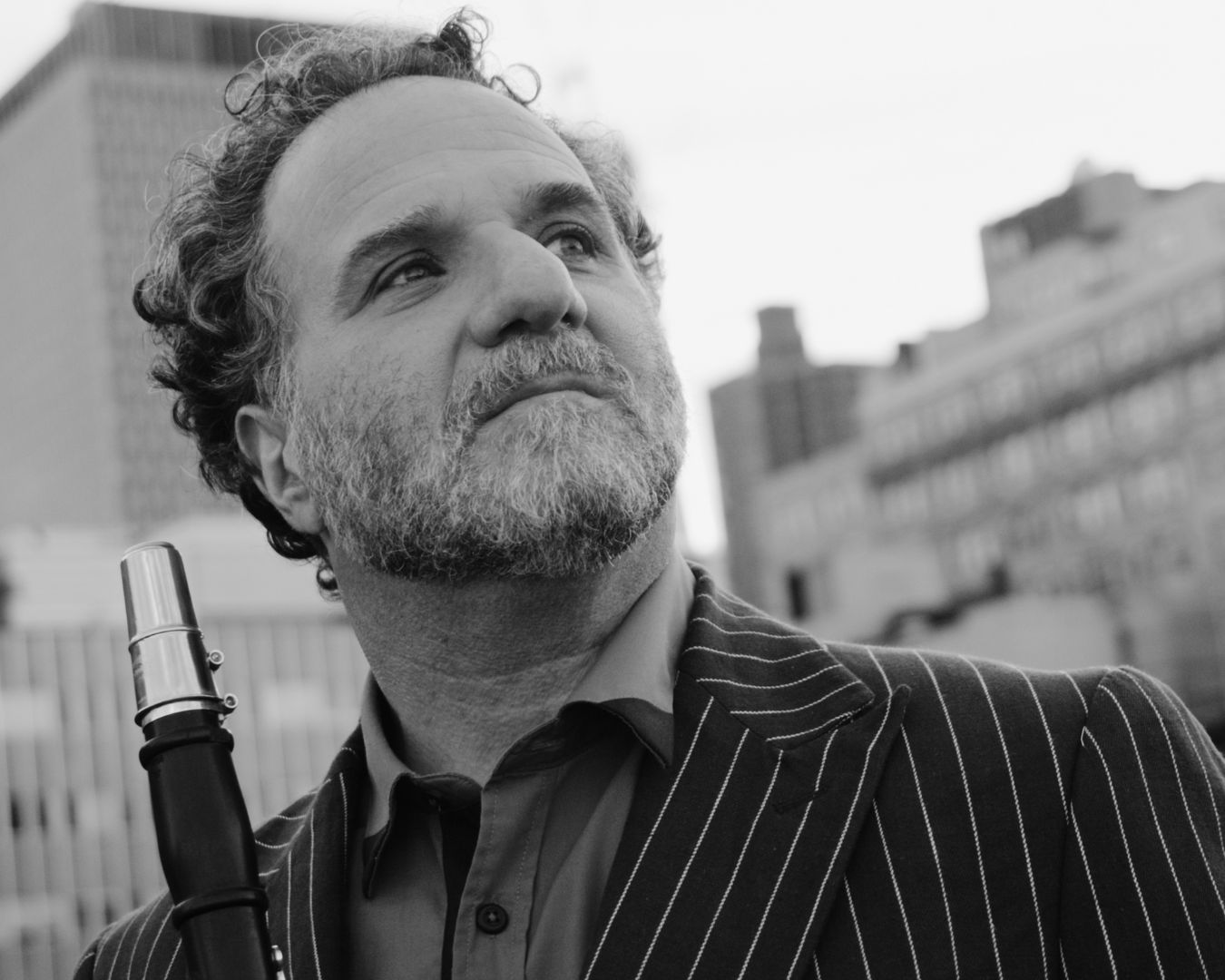
David Krakauer
Clarinet
Grammy-nominated clarinetist David Krakauer is among the world’s most acclaimed musicians in klezmer as well as a major voice in classical music. He was one of the leading protagonists in the redefining and modernization of klezmer in the 1990s, first as a member of the pioneering ensemble The Klezmatics and as part of the Radical Jewish Culture movement initiated by John Zorn, and later as a composer, bandleader, and soloist. He has performed with ensembles and artists such as Cologne’s WDR Big Band, the Kronos Quartet, Emerson String Quartet, Quatuor Debussy, Marin Alsop, Leonard Slatkin, JoAnn Falletta, George Tsontakis, Wlad Marhulets, Nadja Salerno-Sonnenberg, Itzhak Perlman, Uri Caine, Fred Wesley, and Dawn Upshaw. Among his highly acclaimed recordings are Osvaldo Golijov’s The Dreams and Prayers of Isaac the Blind, Paul Moravec’s Tempest Fantasy, and the klezmer album The Twelve Tribes, which was named Jazz Album of the Year at the German Record Critics’ Award. David Krakauer can also be heard in Danny Elfman’s score for the Ang Lee film Taking Woodstock. He has collaborated with Kathleen Tagg on a number of works, including a concerto for klezmer clarinet and orchestra, The Fretless Clarinet, the score for Eric Steel’s 2020 film Minyan, the genre-crossing project Good Vibes Explosion!, and the immersive multimedia program Breath & Hammer, last seen at the Pierre Boulez Saal in 2022. A passionate educator, he is on the clarinet and chamber music faculties of the Manhattan School of Music, the Mannes School of Music/The New School, and the Bard College Conservatory. Every summer he co-teaches the “Innovations in Chamber Music” course with Kathleen Tagg at Accademia Chigiana in Siena, Italy.
November 2026

Kathleen Tagg
Piano
Born in South Africa and based in New York, composer, pianist, and producer Kathleen Tagg moves seamlessly between musical genres and styles. She has performed at venues such as Carnegie Hall, Lincoln Center, and 92NY in New York, Théâtre du Châtelet in Paris, and Schleswig-Holstein Music Festival, but is equally at home in non-conventional spaces and theatrical settings around the world. Recent compositions include the song cycle This Be Her Verse on words by Lila Palmer for soprano Golda Schultz and pianist Jonathan Ware, performed at the Pierre Boulez Saal in 2022, a clarinet concerto co-written with David Krakauer and heard on three continents including at the Philharmonie de Paris, and Please Dream: In His Words with words by Archbishop Desmond Tutu for the Stellenbosch International Chamber Music Festival. Her works have been performed at the festivals of Lucerne and Aix-en-Provence, the Cologne Philharmonie, and the Melbourne Opera House, among other venues. She has collaborated with David Krakauer for many years as co-artistic director of their joint label Table Pounding Music. At the Pierre Boulez Saal, the duo performed the immersive multimedia concert Breath & Hammer in 2019 and again in 2022. Kathleen Tagg studied at the University of Cape Town, Mannes School of Music, and Manhattan School of Music, receiving the Helen Cohn Award as an outstanding doctoral graduate, and was a fellow of the Dramatist Guild of America as well as Opera Composition Fellow at the American Lyric Theater. She teaches piano and chamber music at Columbia University and is a former steering member of the Music Workers Alliance, organizing independent music workers.
November 2026
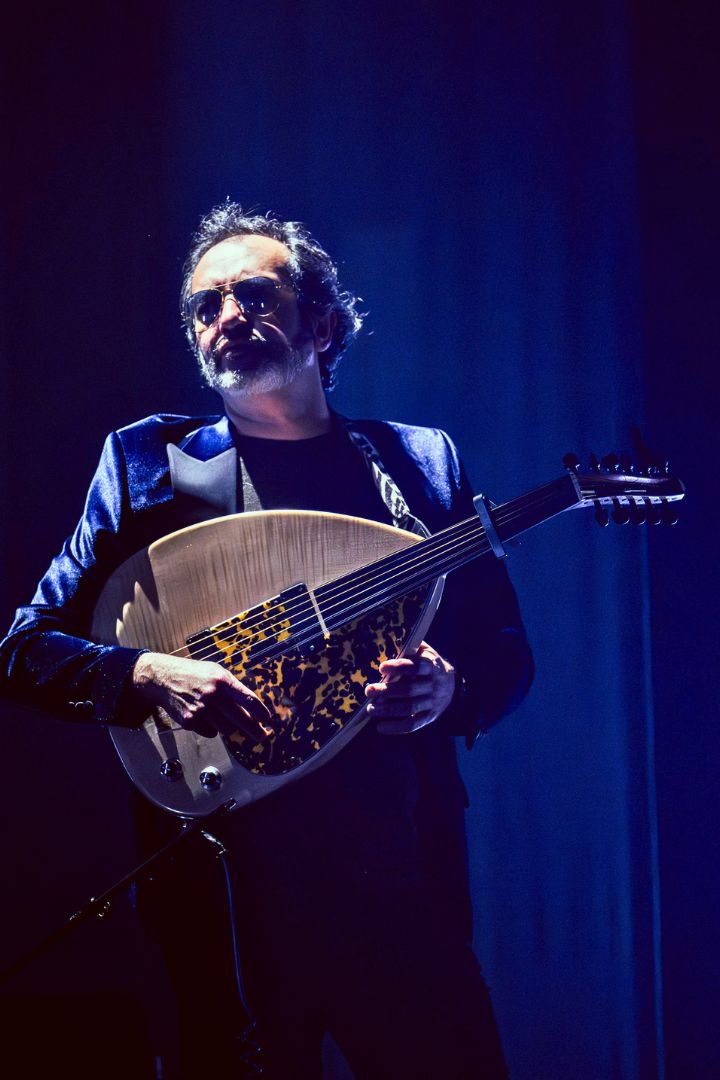
Mehdi Haddab
Electric Oud
The son of an Algerian father and a French mother, Mehdi Haddab grew up in Algeria and Burundi. He began his artistic career in the late 1990s and was one of the first oud virtuosos to perform on an electric version of the instrument. Following the band Ekova and the duo DuOuD with French-Tunisian musician Smadj, he founded the group Speed Caravan in 2006, which has since collaborated with artists such as Rachid Taha, Rocky Singh, Rodolphe Burger, Mick Jones, Damon Albarn, John Paul Jones, and Richard Archer. In 2021, the group released its latest album, Nuba Nova, featuring the late Malouf master Hamdi Benani, which was awarded a Coup de Cœur of the Académie Charles Cros.
November 2026
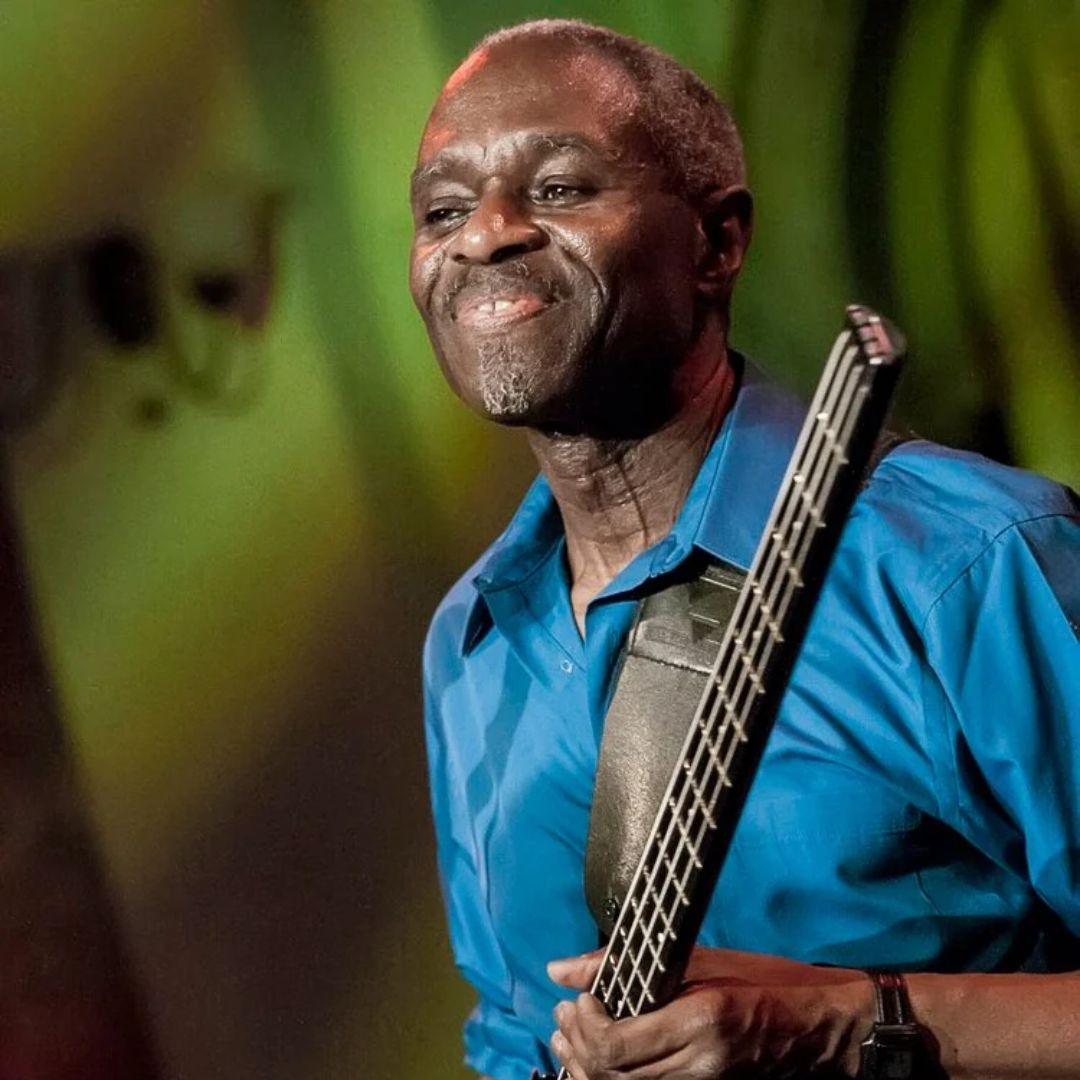
Jerome Harris
Bass and Vocals
As a bassist and guitarist, New York–born Jerome Harris has collaborated with leading artists such as Sonny Rollins, Jack DeJohnette, Bill Frisell, Amina Claudine Myers, Paul Motian, Martha Redbone, Leni Stern, and many others. He has performed throughout the U.S., Japan, Africa, Asia, and the Middle East and features on more than 70 studio recordings, including the albums Rendezvous, Hidden in Plain View, and Soma Coda as bandleader, as well as collaborations with David Krakauer’s Abraham Inc., Roy Nathanson, Don Byron, Ned Rothenberg, and others. He is a graduate of the New England Conservatory of Music and has taught at Hampshire College, William Paterson University, and CUNY’s Lehman College. Since 2020, he has been an active member of the Music Workers Alliance.
November 2026

Karimouche
Vocals
French artist Karima Arimouche aka Karimouche works extensively across music, theater, and film. As a singer, actress, and writer, she has for many years created an artistic universe where rap, chanson, groove, and Arabic soundscapes converge. With powerful lyrics and a sense of humor that unsettles apparent certainties, she tells stories about the contradictions of human nature. Her releases include the albums L’Emballage d’origine, Action, and most recently Folies berbères.
November 2026
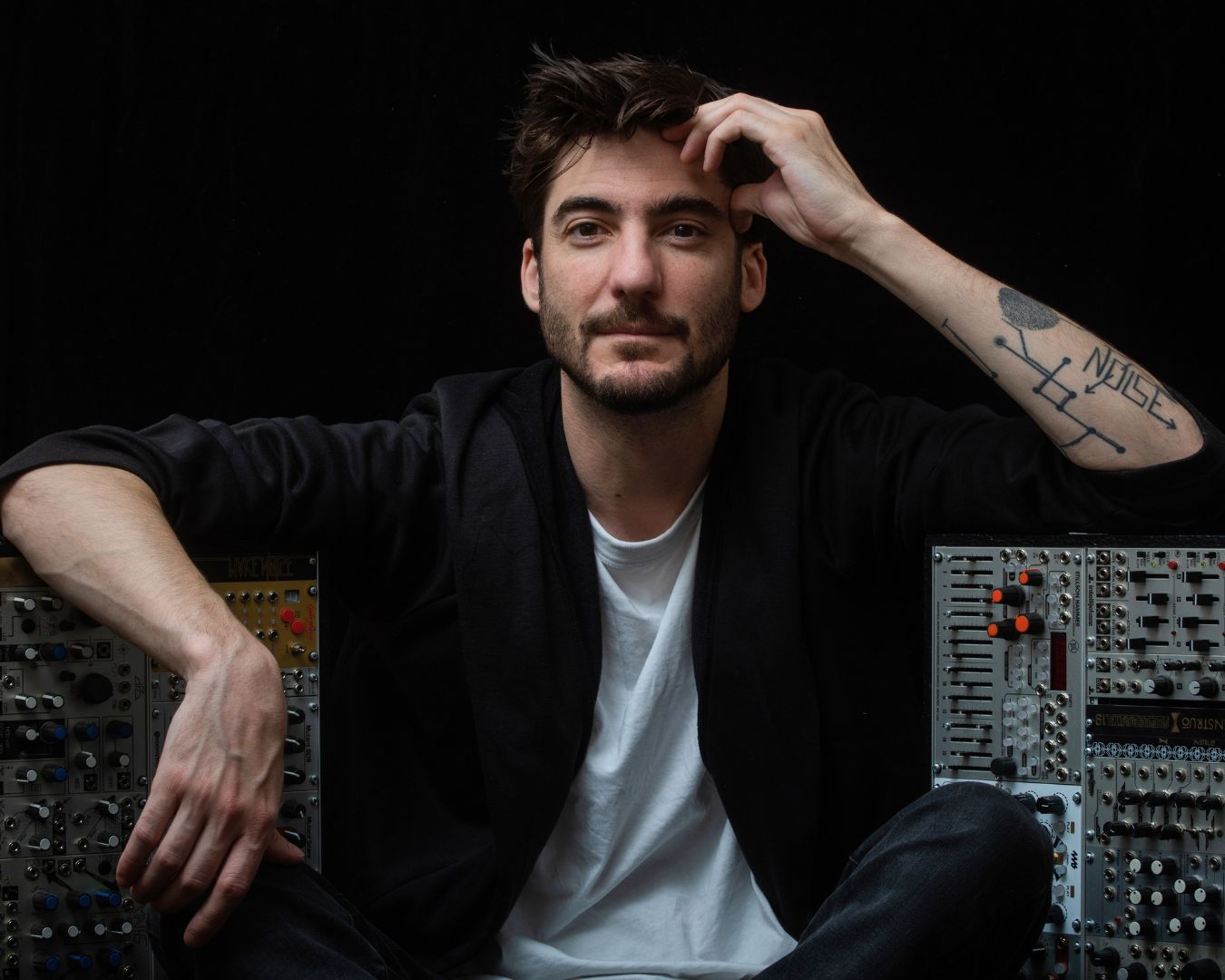
Modgeist
Electronics
For more than 20 years, composer and musician Mikaël Charry has enjoyed international success with various projects ranging across the electronic music scene. With his solo act Modgeist, situated between techno and electronica, he released the three EPs Entropy, Arcanes, and T(h)ree and has performed live in South Korea, China, Canada, at Superbooth Berlin, and at Le Bikini in Toulouse, among other venues, where he opened for Jeff Mills in 2016. In 2007, he founded the Anakronic Electro Orkestra, which blends klezmer with electronic sounds and has collaborated with artists such as David Krakauer, Marc Ribot, Socalled, and Bill Laswell. He also creates analogue, modular techno in his duo Atar Axis with Johann Guillon (Ez3kiel) and has written music for interdisciplinary performances with contemporary dance companies such as K10 and Company Xuan Le.
November 2026
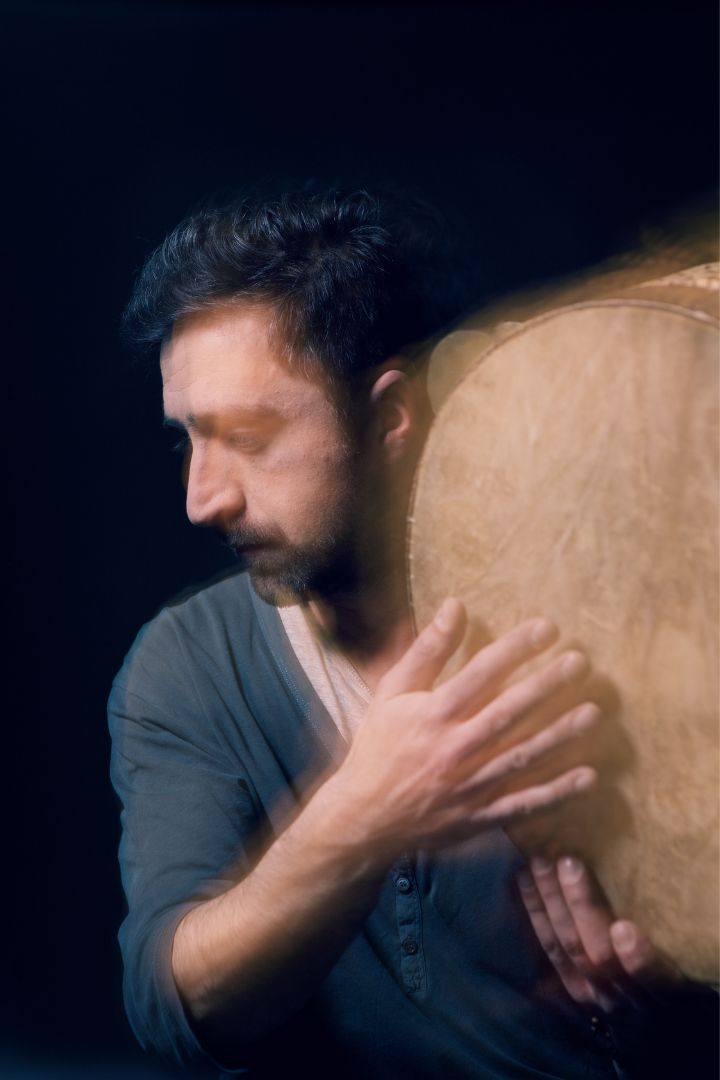
Afra Mussawisade
Percussion
Percussionist Afra Mussawisade was born in Tehran in 1973 as the son of a famous painter and grew up surrounded by art and music. He first studied classical Persian percussion with Arjang Kamkar and the tonbak master Nasser Farhangfar. At the age of ten, he emigrated to Germany, where he also learned to play the piano and cello. Later, he studied Latin American percussion at the Rotterdam Conservatory, in Santiago de Cuba, and in Havana, as well as South Indian percussion at the Karnataka College of Percussion. He has collaborated with a wide variety of artists and ensembles, including the WDR Big Band, Till Brönner, Ernst Reijseger, Zuco 103, Mezzoforte, Cologne’s Gürzenich Orchestra, and Baba Sissoko.
November 2026